Filters
Question type

Study Flashcards

Directional selection would be expected to occur if


A) a new allele arises by mutation that increases fitness.
B) the environment changes.
C) the population is large.
D) a new allele arises by mutation that increases fitness and the environmental changes increase the allele frequency.
E) a new allele arises by mutation that increases fitness, the environment changes and the population is large are correct.

F) A) and C)
G) A) and B)

Correct Answer

verifed

verified

Sickle-cell anemia is a disease that occurred from a point mutation in the replication of DNA. That mutation causes a change of an amino acid in b-globulin. Nonrandom mating (not mating with any individual that has the allele for the mutation) could result in the removal of the mutated allele from a population. This would be an example of natural selection.

A) True
B) False

Correct Answer

verifed

verified

In the Hardy-Weinberg equation, p + q =


A) 0.
B) 0.1.
C) 1.
D) 10.
E) 2.

F) A) and B)
G) C) and E)

Correct Answer

verifed

verified

If a population does not satisfy the Hardy-Weinberg equilibrium model, what may you assume about that population?


A) Evolutionary mechanisms are affecting the population.
B) Evolution is occurring.
C) No new mutations are occurring, only nonrandom mating.
D) No migration is occurring.
E) Evolutionary mechanisms are affecting the population and evolution is occurring.

F) A) and B)
G) B) and C)

Correct Answer

verifed

verified

E

Which of the following would most likely result in a bottleneck event, why?


A) A small population of geese migrates and joins a large nesting flock of the same species. This is a . bottleneck event because the small population do not bring in any new alleles to the large flock.
B) A mutation occurs in an individual poison ivy plant, doubling the number of seeds it produces. This . is a bottleneck event because even though the mutation is passed down to the next generations, it does not change the frequency of any other alleles in the population.
C) A hurricane blows through a coastal swamp, killing 98% of the snails in a population. This is only a. bottleneck event if there is a change in the number of alleles in the population. The 2% of the snails remaining still have the same allele frequencies as the total population.
D) A large population of broomsedge grass in a field is determined to be in Hardy-Weinberg . equilibrium. This is a population bottleneck event because there is no random mating going on which increases the likelyhood that there will be a decrease in the number of alleles in the population.
E) A small population of ducks with red beaks join a large population of ducks that have no red beaks.. After 5 generations the number of ducks with red beaks is reaching 50% in the population. This is a bottleneck event because there is a decrease in the number of ducks without red beaks.

F) A) and C)
G) A) and D)

Correct Answer

verifed

verified

Natural selection is one mechanism to change allele frequency in a gene pool, what is the name of the mechanism that fosters change in allele frequencies due to random chance?


A) Genetic Drift.
B) Natural selection also fosters these changes.
C) Non-Darwinian evolution.
D) Neutral variation.
E) Gene flow from one population to another.

F) B) and D)
G) B) and C)

Correct Answer

verifed

verified

In the Hardy-Weinberg equation, the letters p and q represent


A) frequencies of alleles in a population.
B) the number of individuals of different phenotypes in a population.
C) the number of individuals of different genotypes in a population.
D) the frequencies of individuals of different genotypes in a population.
E) the square of individuals of different genotypes in a population.

F) D) and E)
G) C) and D)

Correct Answer

verifed

verified

To analyze genetic variation in populations, one approach is to consider the frequency of alleles. When calculating an allele frequency for a diploid species, how many copies of an allele are present?


A) 1
B) 2
C) 3
D) 4
E) 5

F) B) and D)
G) B) and E)

Correct Answer

verifed

verified

How does gene flow affect the genetic composition in populations?


A) Gene flow promotes genetic diversity by introducing new alleles into populations.
B) Gene flow tends to make the allele frequencies in neighboring populations more similar to each other.
C) Gene flow promotes genetic diversity by introducing new alleles into populations and gene flow . tends to make the allele frequencies in neighboring populations more similar to each other.
D) Gene flow promotes genetic similarities by removing alleles from a population.

E) A) and D)
F) None of the above

Correct Answer

verifed

verified

Why would a female song bird choose to mate with a male that has a large song repertoire?


A) females tend to select traits that are well developed to judge fitness of a male.
B) females judge by feather color and voice of the male.
C) a long song allows the female to study the male for any physical defects before mating.
D) immature males have a long varied song where older, less fit males will have a short song.
E) females only judge fitness by physical appearance, not song repertoire.

F) A) and B)
G) A) and C)

Correct Answer

verifed

verified

Cryptic female choice is a type of intersexual selection where


A) the female genital tract selects for sperm that tend to be unrelated to the female.
B) the egg itself has mechanisms to prevent fertilization by genetically related sperm.
C) pollen from unrelated plants is not able to fertilize an egg.
D) the female genital tract and/or the egg itself prevents fertilization by genetically related sperm.
E) the female chooses which male can mate with her based on cryptic coloration.

F) A) and E)
G) A) and D)

Correct Answer

verifed

verified

GGG and GGC are codons for the amino acid, glycine. A mutation caused the insertion of a cytosine in place of the guanine during DNA replication. Over many generations the DNA changes so that the frequency of GGC is similar to that of GGG. What is this phenomenon called and what affect does GGG and GGC are codons for the amino acid, glycine. A mutation caused the insertion of a cytosine in place of the guanine during DNA replication. Over many generations the DNA changes so that the frequency of GGC is similar to that of GGG. What is this phenomenon called and what affect does    this mutation have on the population? A)  directional selection; that has resulted in genetic uniformity in the species. B)  a bottleneck effect; decreases the number alleles in the population. C)  stabilizing selection; that reduced genetic diversity within the species. D)  adaptive variation; resulting in reduced genetic diversity in females because the GGC coded for . bright feather color instead of the mottled brown feather color coded for by GGG. E)  neutral variation; the change in genetic code does not cause a change in phenotype therefore there is . no change in reproductive success. This mutation then does not affect the population. this mutation have on the population?


A) directional selection; that has resulted in genetic uniformity in the species.
B) a bottleneck effect; decreases the number alleles in the population.
C) stabilizing selection; that reduced genetic diversity within the species.
D) adaptive variation; resulting in reduced genetic diversity in females because the GGC coded for . bright feather color instead of the mottled brown feather color coded for by GGG.
E) neutral variation; the change in genetic code does not cause a change in phenotype therefore there is . no change in reproductive success. This mutation then does not affect the population.

F) All of the above
G) B) and E)

Correct Answer

verifed

verified

Factors that govern microevolution are rooted in two related phenomena, they are


A) first, introduction of new genetic variation into a population and second, mutations.
B) first, altering the prevalence of a given allele or genotype in a population and second mutations.
C) first, introduction of new genetic variation into a population and altering the prevalence of a given. allele or genotype in a population.
D) first, splitting up a population and second migration.
E) first, nonrandom mating and second no natural selection.

F) B) and C)
G) C) and D)

Correct Answer

verifed

verified

C

The term polymorphism refers to the phenomenon that a trait displays variation within a population. Which of the following is an example of polymorphic trait in a population?


A) The A, B, O blood types found in humans.
B) The loss of hair in elderly animals that are malnourished.
C) The pink or white flowers of the four o'clock flower, both pink and white individuals are prevalent.
D) Both the A,B,O blood types in humans and the pink and white flowers of the four o'clocks.
E) Both the A,B,O blood types in humans and the loss of hair in elderly animals that are malnourished.

F) None of the above
G) B) and C)

Correct Answer

verifed

verified

Sexual selection affects male characteristics more than female characteristics. Sexual selection operates by which of the following methods?


A) Intrasexual selection, where one sex directly competes with each other for the opportunity to mate with the opposite sex.
B) Intersexual selection, where females select mate on the bases of their physical attributes.
C) intersexual selection, cryptic female choice.
D) Intrasexual selection where one sex directly competes with each other for mates and intersexual
E) Predatory sexual selection, where females only choose mates that can avoid predators.

F) A) and B)
G) B) and D)

Correct Answer

verifed

verified

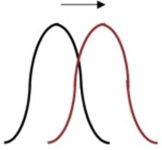
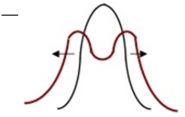
During normal climatic conditions, regular amounts of rainfall, the average beak depth for finches was 6.8mm. The Grants found that after a drought, finch beaks increased in depth to 9.8mm. The birds with deep beaks were better able to eat large, hard seeds. Small hard seeds were also available after the drought, but could only be eaten by birds with shallow beaks. What might happen to the population if this trend continues? Choose the graphical representation that would most closely fit a population that has changed from the majority of individuals having a beak depth of 6.8, to a population where both shallow and deep beaks were the norm and only a few individuals had an average beak depth. What is the name of this type of natural selection?


A)
During normal climatic conditions, regular amounts of rainfall, the average beak depth for finches was 6.8mm. The Grants found that after a drought, finch beaks increased in depth to 9.8mm. The birds with deep beaks were better able to eat large, hard seeds. Small hard seeds were also available after the drought, but could only be eaten by birds with shallow beaks. What might happen to the population if this trend continues? Choose the graphical representation that would most closely fit a population that has changed from the majority of individuals having a beak depth of 6.8, to a population where both shallow and deep beaks were the norm and only a few individuals had an average beak depth. What is the name of this type of natural selection? A)      directional selection. B)      disruptive (diversifying)  selection. C)      stabilizing selection. D)     balancing selection.
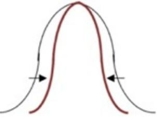
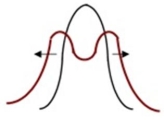
directional selection.
B)
During normal climatic conditions, regular amounts of rainfall, the average beak depth for finches was 6.8mm. The Grants found that after a drought, finch beaks increased in depth to 9.8mm. The birds with deep beaks were better able to eat large, hard seeds. Small hard seeds were also available after the drought, but could only be eaten by birds with shallow beaks. What might happen to the population if this trend continues? Choose the graphical representation that would most closely fit a population that has changed from the majority of individuals having a beak depth of 6.8, to a population where both shallow and deep beaks were the norm and only a few individuals had an average beak depth. What is the name of this type of natural selection? A)      directional selection. B)      disruptive (diversifying)  selection. C)      stabilizing selection. D)     balancing selection.
disruptive (diversifying) selection.
C)
During normal climatic conditions, regular amounts of rainfall, the average beak depth for finches was 6.8mm. The Grants found that after a drought, finch beaks increased in depth to 9.8mm. The birds with deep beaks were better able to eat large, hard seeds. Small hard seeds were also available after the drought, but could only be eaten by birds with shallow beaks. What might happen to the population if this trend continues? Choose the graphical representation that would most closely fit a population that has changed from the majority of individuals having a beak depth of 6.8, to a population where both shallow and deep beaks were the norm and only a few individuals had an average beak depth. What is the name of this type of natural selection? A)      directional selection. B)      disruptive (diversifying)  selection. C)      stabilizing selection. D)     balancing selection.
stabilizing selection.
D)
During normal climatic conditions, regular amounts of rainfall, the average beak depth for finches was 6.8mm. The Grants found that after a drought, finch beaks increased in depth to 9.8mm. The birds with deep beaks were better able to eat large, hard seeds. Small hard seeds were also available after the drought, but could only be eaten by birds with shallow beaks. What might happen to the population if this trend continues? Choose the graphical representation that would most closely fit a population that has changed from the majority of individuals having a beak depth of 6.8, to a population where both shallow and deep beaks were the norm and only a few individuals had an average beak depth. What is the name of this type of natural selection? A)      directional selection. B)      disruptive (diversifying)  selection. C)      stabilizing selection. D)     balancing selection. balancing selection.

E) All of the above
F) B) and C)

Correct Answer

verifed

verified

B

Neutral variation is supported by the observation that most changes in codons occur in the third position within the codon, which often has no effect on the sequence of amino acids in the protein.

A) True
B) False

Correct Answer

verifed

verified

The number of generations it takes for an allele to become fixed or lost in a population depends on population size. There are three populations associated with the frequency of the b allele and its change in frequency. Which population(s) show dramatic change in b allele frequency and what are these changes? Population 1 = brown mouse (top line) ; Population 2 = middle line; population 3 = white mouse (bottom line) . The number of generations it takes for an allele to become fixed or lost in a population depends on population size. There are three populations associated with the frequency of the b allele and its change in frequency. Which population(s)  show dramatic change in b allele frequency and what are these changes? Population 1 = brown mouse (top line) ; Population 2 = middle line; population 3 = white mouse (bottom line) .    A)  Population 1; it shows an extinction of the ballele resulting in all brown mice. B)  Population 3; it shows an extinction of the ballele resulting in all white mice. C)  Population 2; it shows an increase in the frequency of the b allele after 50 generations. D)  Population 1; it shows a fixation of the ballele resulting in all brown mice and Population 3 shows . an extinction of the b allele resulting in all white mice. E)  Population 1, 2, and 3 all show drastic changes in ballele frequency after 50 generations, with the . complete elimination of the b allele in all three populations.


A) Population 1; it shows an extinction of the ballele resulting in all brown mice.
B) Population 3; it shows an extinction of the ballele resulting in all white mice.
C) Population 2; it shows an increase in the frequency of the b allele after 50 generations.
D) Population 1; it shows a fixation of the ballele resulting in all brown mice and Population 3 shows . an extinction of the b allele resulting in all white mice.
E) Population 1, 2, and 3 all show drastic changes in ballele frequency after 50 generations, with the . complete elimination of the b allele in all three populations.

F) C) and E)
G) B) and D)

Correct Answer

verifed

verified

Over generations in a population, individuals with higher fitness values will


A) become less prevalent due to natural selection against them.
B) become more prevalent.
C) stay at the same frequency in the population.
D) become less prevalent due to their having less stamina.
E) become less prevalent due to natural selection against them and become less prevalent due to their having less stamina are correct.

F) C) and E)
G) A) and B)

Correct Answer

verifed

verified

Male deer have large antlers that are used to challenge each other in fights for territory and females. The females of this group actively choose the strongest males. Which type of sexual selection is occurring with the deer population?


A) Stabilizing selection.
B) negative frequency-dependent selection.
C) Intersexual selection.
D) Intrasexual selection.
E) Intersexual and intrasexual selection are both occurring.

F) A) and B)
G) A) and D)

Correct Answer

verifed

verified

Showing 1 - 20 of 31

Related Exams

Show Answer