A) $300.
B) $1,700.
C) $2,000.
D) $2,300.
F) A) and C)
Correct Answer

verified
Correct Answer
verified
A) area below the demand curve and above the price.
B) distance from the demand curve to the horizontal axis.
C) distance from the demand curve to the vertical axis.
D) area below the demand curve and above the horizontal axis.
F) A) and C)
Correct Answer
verified
Correct Answer
verified
A) the amount a buyer is willing to pay for a good minus the amount the buyer actually pays for it.
B) the amount a buyer is willing to pay for a good minus the cost of producing the good.
C) the amount by which the quantity supplied of a good exceeds the quantity demanded of the good.
D) a buyer's willingness to pay for a good plus the price of the good.
F) C) and D)
Correct Answer
verified
Correct Answer
verified
A) maximizes costs of the seller.
B) maximizes tax revenue for the government.
C) maximizes the combined welfare of buyers and sellers.
D) minimizes the expenditure of buyers.
F) A) and B)
Correct Answer
verified
Correct Answer
verified
A) imposes a tax on that market.
B) imposes a binding price floor on that market.
C) removes a binding price ceiling from that market.
D) None of the above is correct.
F) A) and B)
Correct Answer
verified
Correct Answer
verified
Correct Answer
verified
Three unit...View Answer
Correct Answer
verified
View Answer
Correct Answer
verified
Total producer surpl...View Answer
Correct Answer
verified
View Answer
A) willingness to pay of all buyers in the market.
B) value each buyer in the market places on the good.
C) highest price buyers are willing to pay for each quantity.
D) ability of buyers to obtain the quantity they desire.
F) B) and C)
Correct Answer
verified
Correct Answer
verified
A) 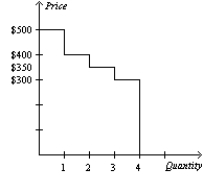
B) 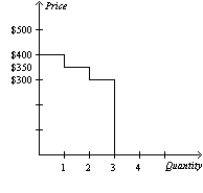
C) 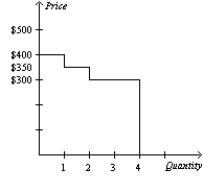
D) 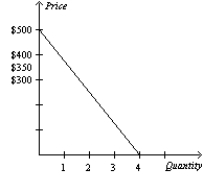
F) A) and C)
Correct Answer
verified
Correct Answer
verified
A) the market is in equilibrium.
B) consumer surplus is maximized.
C) the sum of consumer surplus and producer surplus is maximized.
D) the marginal value to buyers is less than the marginal cost to sellers.
F) A) and D)
Correct Answer
verified
Correct Answer
verified
A) $200.
B) $400.
C) $600.
D) $800.
F) A) and B)
Correct Answer
verified
Correct Answer
verified
A) A.
B) A+C.
C) A+B+C.
D) D+G.
F) C) and D)
Correct Answer
verified
Correct Answer
verified
B) False
Correct Answer
verified
Correct Answer
verified
A) $200.
B) $300.
C) $500.
D) $700.
F) A) and B)
Correct Answer
verified
Correct Answer
verified
A) $25
B) $35
C) $60
D) $110
F) None of the above
Correct Answer
verified
Correct Answer
verified
A) The cost of something is what you give up to get it.
B) Rational people think at the margin.
C) Markets are usually a good way to organize economic activity.
D) People respond to incentives.
F) B) and C)
Correct Answer
verified
Correct Answer
verified
A) $100.
B) $200.
C) $50.
D) $450.
F) None of the above
Correct Answer
verified
Correct Answer
verified
A) one ticket; $100
B) two tickets; $100
C) two tickets; $0
D) three tickets; $0
F) A) and C)
Correct Answer
verified
Correct Answer
verified
A) increase consumer surplus in the market for steak and decrease producer surplus in the market for chicken.
B) increase consumer surplus in the market for steak and increase producer surplus in the market for chicken.
C) decrease consumer surplus in the market for steak and increase producer surplus in the market for chicken.
D) decrease consumer surplus in the market for steak and decrease producer surplus in the market for chicken.
F) B) and C)
Correct Answer
verified
Correct Answer
verified
A) For the three individuals together, consumer surplus amounts to $35.
B) Having bought the cell phone, Kristen is better off than she would have been had she not bought it.
C) Had the price of the cell phone been $95 rather than $80, Katie and Kendra definitely would have been buyers and Kristen definitely would not have been a buyer.
D) The fact that all three individuals paid $80 for the same type of cell phone indicates that each one placed the same value on that cell phone.
F) A) and D)
Correct Answer
verified
Correct Answer
verified
Showing 261 - 280 of 547
Related Exams